
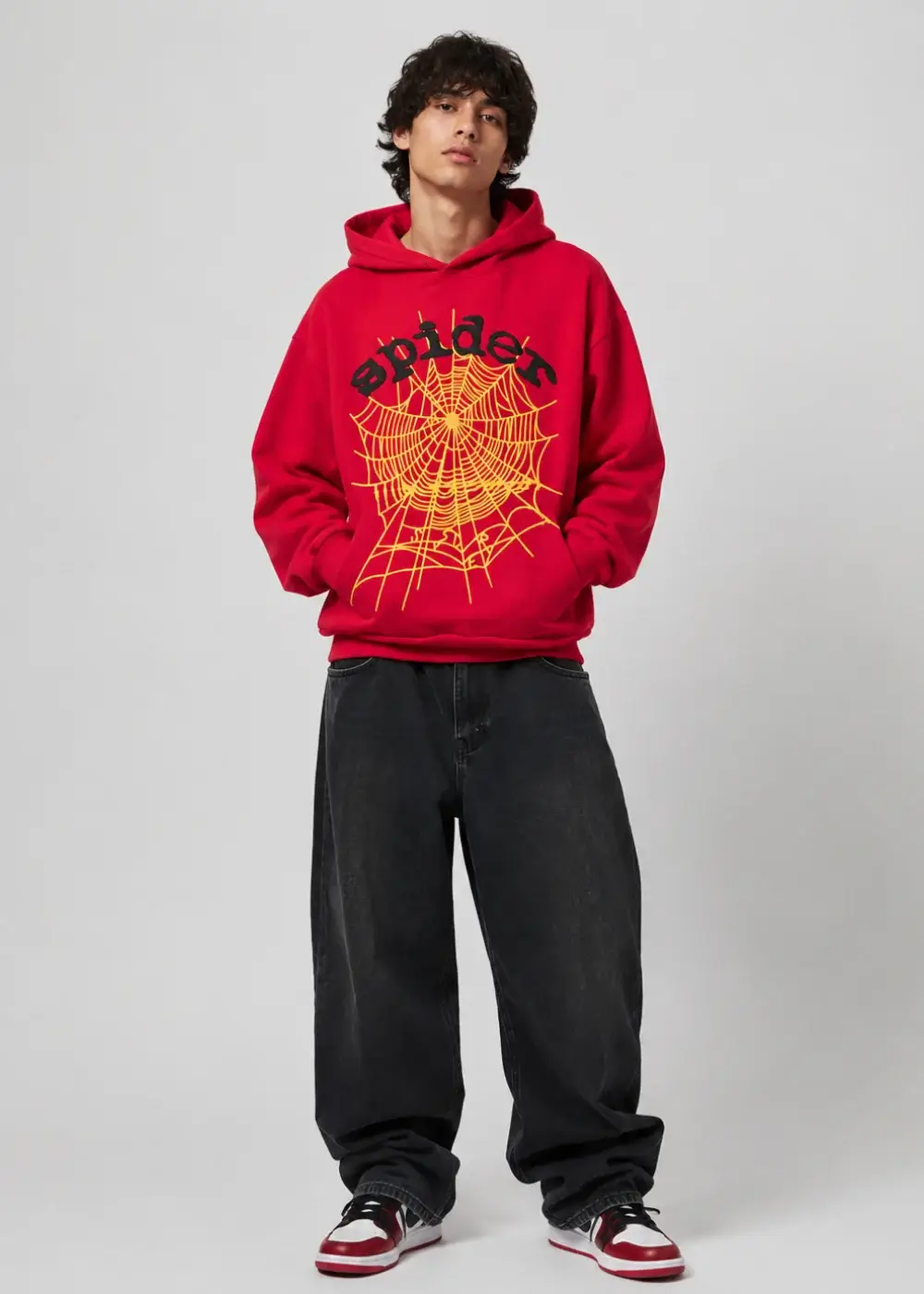
Graphic hoodies moved from gym lockers to concert stages because hip-hop turned everyday clothing into a statement of identity. The story spans roughly five decades, and it explains why a heavyweight hoodie with a bold print now feels as natural under stage lights as it does on a city block. If you wear streetwear today, you are wearing the result of that history.
Where the hoodie started: workwear, not fashion
The hooded sweatshirt began as practical workwear for laborers and athletes in cold warehouses and outdoor training sessions in the 1930s. It was built for warmth and durability, not for style. For decades it stayed in that lane, worn by boxers on morning runs and by crews loading freight in winter. That utilitarian origin still matters, because the qualities that made it good workwear, thick fleece, a deep hood, a roomy cut, are the same qualities that later made it perfect for performers who needed to move, sweat, and still look imposing.
The Bronx era: style built from the block up
Hip-hop fashion in the late 1970s and 1980s was created by the audience, not by designers. Early crews in New York wore what the neighborhood wore, hooded sweatshirts, track jackets, sneakers, and made them iconic through attitude and repetition. B-boys pulled hoods up before a battle. Graffiti writers wore hoods for anonymity on late-night train runs. The hoodie became shorthand for the culture itself: practical, a little guarded, and instantly recognizable. When rap acts started touring, they did not switch into costumes. They brought the block onto the stage, and the audience saw themselves up there.
The 1990s: logos, labels, and the rise of the graphic
The 1990s made the printed graphic the centerpiece of streetwear. Sportswear logos, airbrushed portraits, and oversized lettering turned sweatshirts into billboards for loyalty, whether that loyalty was to a crew, a label, or a neighborhood. Independent streetwear brands grew alongside the music, and artists began founding their own lines instead of just wearing someone else’s. A graphic on the chest stopped being decoration and started being a signal. People could read your affiliations from across the street, and that legibility is exactly what a stage demands: an image that lands from the last row.
The 2000s and 2010s: streetwear meets high fashion
The walls between streetwear and luxury fashion came down in the 2000s and 2010s, and the hoodie walked through the gap first. Skate and street labels collaborated with heritage fashion houses, resale culture exploded, and rappers became creative directors. The graphic hoodie was suddenly on runways and in museum retrospectives without ever leaving the street. Prices rose, drops sold out in minutes, and limited colorways became a language of their own. Through all of it the silhouette barely changed, which says something: the hoodie did not need fixing.
Why the hoodie works as stage wear
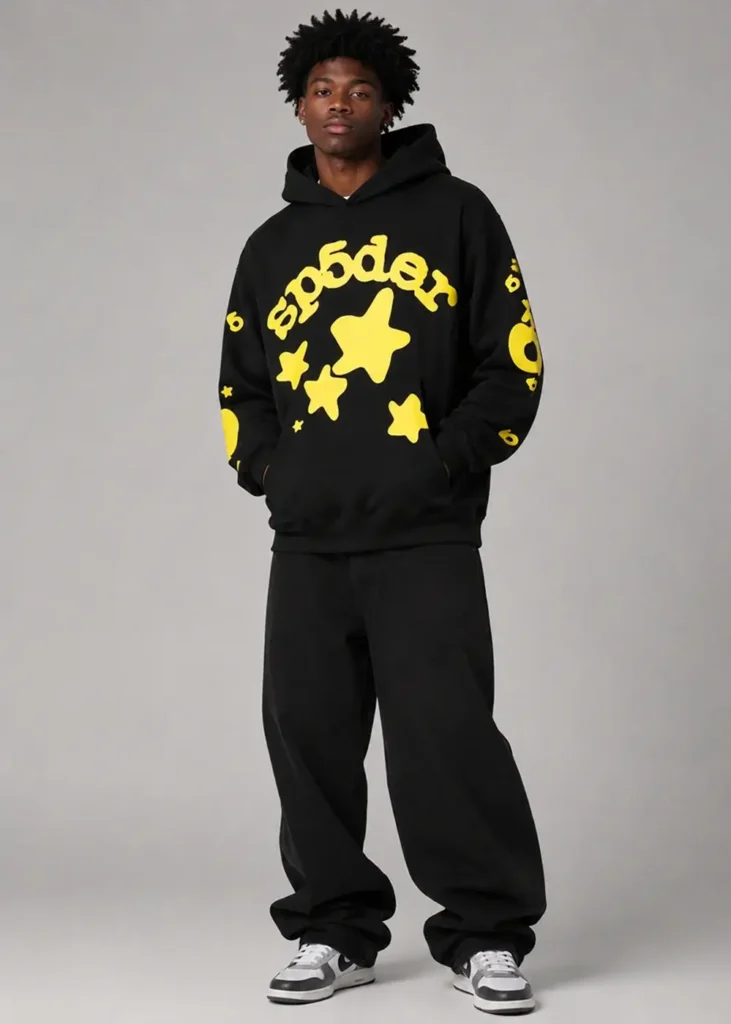
A hoodie succeeds on stage because it solves three performance problems at once: visibility, movement, and persona. A bold web print or oversized graphic reads clearly under harsh lighting and on camera. Heavyweight fleece moves with a performer instead of restricting them. And the hood itself is theater, up for mystery during an intro, down for the crowd at the peak of a set. Modern spider-web graphics, puff prints, and rhinestone details push this even further, catching stage light in a way flat cotton never could. You can see the same design logic in a piece like the OG Web hoodie in black and red: high contrast, a graphic that reads at distance, and a cut built for movement.
A quick timeline
| Era | What changed | What it gave streetwear |
|---|---|---|
| 1930s to 1960s | Hoodie invented as workwear and athletic gear | The heavyweight, roomy silhouette |
| 1970s to 1980s | Hip-hop culture adopts everyday clothing | The hoodie as identity and attitude |
| 1990s | Graphics and logos take over | The chest print as a signal |
| 2000s to 2010s | Streetwear crosses into luxury | Drops, colorways, collector culture |
| 2020s | Stage and street fully merge | Web prints, puff ink, rhinestone detail |
What this history means when you buy
Understanding the lineage helps you buy pieces that hold up instead of chasing noise. The graphics that lasted were legible, high contrast, and tied to a real visual identity, not random slogans. That is a useful filter when you browse a collection of graphic hoodies: ask whether the print would still read from thirty feet away, and whether the base garment has the weight to drape like the pieces you see on stage. The same logic applies to a full look, which is why matched hoodie and sweatpants sets became a staple, they carry one visual idea head to toe, exactly the way a performer builds an outfit.
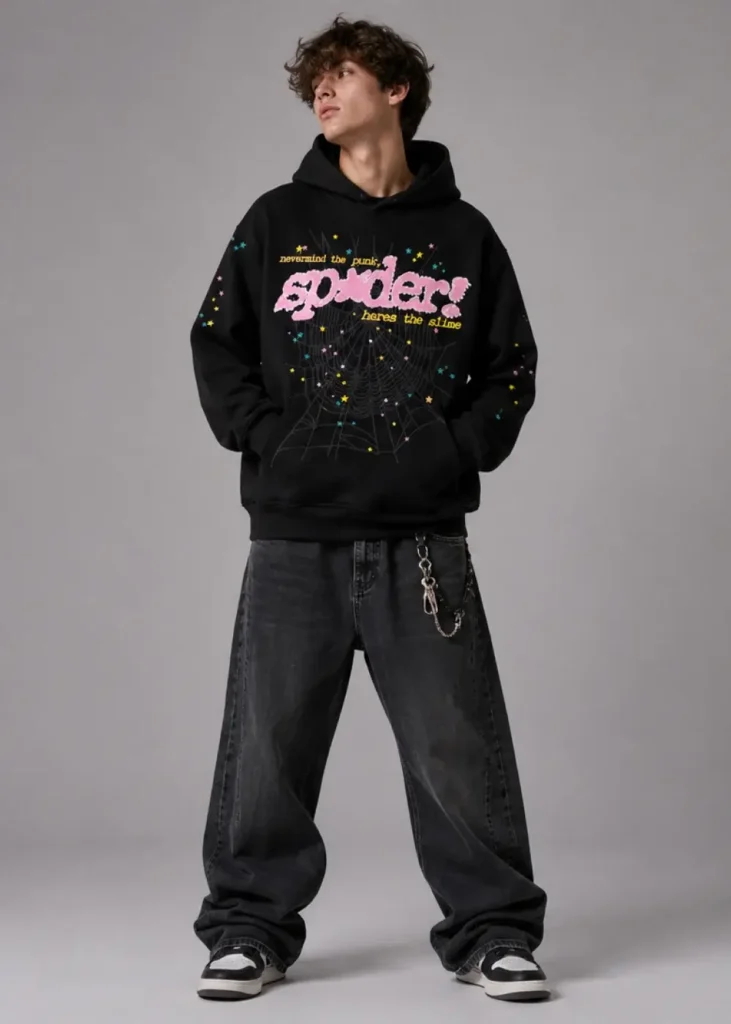
The hoodie earned its place under stage lights by staying honest to where it came from. It was never a costume. That is the whole point.
FAQ
Did hip-hop invent the hoodie?
No. The hooded sweatshirt existed as workwear and athletic gear decades before hip-hop. What hip-hop did was turn it into a cultural symbol and a stage garment, which changed how the whole world saw it.
Why are stage hoodies usually oversized?
An oversized cut moves better during performance, reads as a stronger silhouette under lighting, and matches the relaxed proportions streetwear inherited from 1990s fits. It is a practical choice that became an aesthetic one.
What makes a graphic hoodie feel authentic rather than costume-like?
Legibility and restraint. Prints that reference a consistent visual identity, strong contrast against the base color, and quality fleece that drapes with weight all signal a real streetwear piece rather than a novelty item.